Cudium's Blog

African Businesses

Bank Delays vs Modern Payment Platforms: What’s Really Slowing Your Business Down?
Blog, Insights

Bank Delays vs Modern Payment Platforms: What’s Really Slowing Your Business Down?

If you’ve ever sent money abroad through a traditional bank, you already know the experience. Forms.Follow-ups.Waiting. A payment that should take minutes stretches into days. And once the money leaves your account, visibility often disappears. And for years, businesses accepted this as normal. But today, as global trade moves faster than ever, the question has changed. It’s no longer “Why is this taking time?” It’s “Why is this still slow at all?” Why Banks Were Never Built for Fast Global Trade Traditional banks were not designed for modern cross-border commerce. International bank transfers rely on correspondent banking networks, where funds pass through multiple institutions before reaching the final destination. Each step adds checks, delays, and costs. The reality is that many of these processes are still manual, many rely on legacy systems, and many offer little visibility once funds are in transit. Banks prioritize caution, not speed, and for businesses operating on tight timelines, this creates friction. Where Bank Delays Really Come From Bank delays are rarely caused by a single issue. Payments may pass through several correspondent banks,  FX conversions happen at different stages, and compliance checks can occur after funds have already moved. If any part of the chain slows down, the entire payment stalls, and businesses are left waiting without clarity. How Modern Payment Platforms Are Built Differently Modern cross-border payment platforms are designed specifically for international transactions. Instead of relying on multiple intermediaries, they use direct payment corridors, automated compliance checks, and real-time monitoring. This means: Compliance happens upfront, not after, and businesses can track their payments from start to finish. Does that make traditional banks inefficient?  Truth is, speed isn’t the real advantage; reliability is Speed alone doesn’t solve payment problems; what businesses really need is reliability. Reliable settlement timelines help suppliers plan shipments, build confidence, and reduce operational stress. A “fast” payment that gets stuck is worse than a slower one that arrives when promised. What Businesses Should Look for Beyond “Fast” When choosing a cross-border payment platform, businesses should look beyond speed claims. Ask: These factors determine whether payments scale smoothly or become a recurring headache. How Cudium Approaches Modern Payments Cudium is built for businesses that have outgrown delays and uncertainty. We don’t replace banks; we complement what businesses need when speed, clarity, and control matter most. As your business grows, your payment infrastructure should grow with it.
The Hidden Cost of Using Unlicensed Payment Providers for International Payments
Blog, Insights

The Hidden Cost of Using Unlicensed Payment Providers for International Payments

International payment is built on one fragile thing: trust! Trust that when you send money, it will arrive, that your supplier will receive it on time, and that nothing will break, delay, or disappear along the way. Unfortunately, for many African businesses making cross-border payments, that trust is being tested quietly and repeatedly. At first, everything looks fine, the payment option seems cheaper, and the process feels faster until it isn’t. And when things go wrong, businesses often look in the wrong direction, blaming the bank, the country, or the currency. But in many cases, the real issue sits elsewhere. It’s the payment provider itself. What Does “Unlicensed” Really Mean in Cross-Border Payments? When a payment provider is licensed, it means they are legally approved to move money across borders and are monitored by financial regulators. They are required to follow strict rules around compliance, reporting, and customer protection. An unlicensed payment provider, on the other hand, operates without full regulatory approval in one or more countries involved in the transaction. This doesn’t always look obvious. Some platforms appear legitimate, some are registered as businesses, and some even process payments successfully, for a while. But registration is not the same as regulation. And in cross-border payments, that difference matters more than most businesses realize. The Hidden Costs Businesses Don’t See Until It’s Too Late Using an unlicensed or poorly regulated payment platform often feels fine until something goes wrong. Delayed or Frozen Funds: When regulators or partner banks flag a transaction, funds can be held for additional checks. These delays don’t come with clear timelines, and businesses are often left waiting without answers. Supplier Trust Breaks Down: In international trade, trust is currency. A delayed payment can mean delayed shipments, cancelled orders, or suppliers demanding advance payments in the future. No Real Accountability: If a payment fails or goes missing, unlicensed providers often lack the structure or obligation to resolve issues quickly. When things go wrong, businesses are left exposed. What started as a “cheaper” option quietly becomes expensive financially and reputationally. Why African Businesses Are More Exposed to These Risks African businesses face unique challenges when it comes to international payments due to various reasons. Some countries have restricted or closely monitored payment corridors, compliance rules differ widely from one destination to another, and documentation, tax requirements, and transaction limits are not universal. This means sending money from Nigeria to China is not the same as sending money from Nigeria to the UK or South Africa, even if the amount is identical. So, when businesses rely on unlicensed intermediaries in these corridors, transactions are more likely to be flagged, delayed, or blocked entirely. How Licensing Protects Your Business Beyond Compliance Licensed payment providers don’t just help you “follow rules,” they protect how your business operates. With compliant payment corridors: Licensing ensures that the infrastructure behind your payments is built to handle real business volumes, not just occasional transfers. And this is what sets Cudium apart. At Cudium, compliance is not an afterthought; it’s part of the foundation. We operate only in fully licensed, regulated corridors, actively monitor regulatory changes across countries, and flag potential issues before payments are processed. This means businesses can send international payments with clarity, control, and confidence, knowing their money is moving through trusted routes. Fast and cheap payments mean very little if your money doesn’t arrive, and in international trade, the real cost of using unlicensed payment providers isn’t always visible at first, but when it shows up, it can disrupt your entire operation. So, before your next transfer, take time to understand who is really moving your money and how they are regulated, and if you’d like to learn more about compliant payment corridors or how Cudium approaches cross-border payments differently, our team is always available to share insights.

Best Ways to Make International Transactions
Blog, Insights

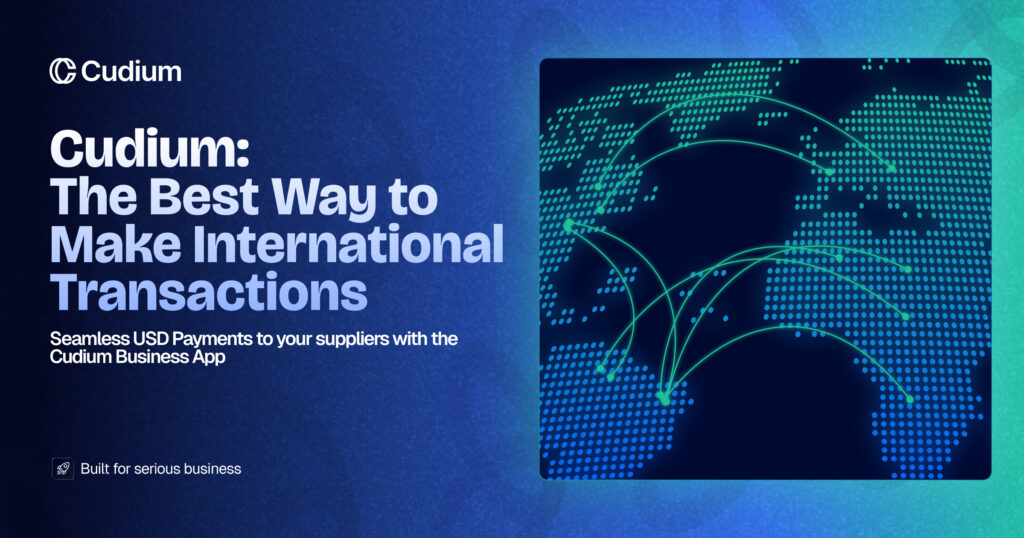
Cudium: The Best Way to Make International Transactions

Are international payments frustrating and complicated? Are delays, high fees, and confusing processes slowing your business down? If this sounds familiar, you’re not alone. Many importers and business owners face similar challenges when sending money abroad. With Cudium, one of the best ways to make international transactions, sending USD payments to your suppliers is fast, secure, and hassle-free. Here’s how Cudium simplifies international payments and why it stands out among traditional methods. How International Payments Work and Why They Can Be Complicated International payments involve transferring money from a business bank account in one country to another in a different country, often involving currency conversions and several intermediaries such as correspondent banks. These intermediaries increase transaction fees, processing times, and the risk of delays or errors. Traditional payment methods like wire transfers or letters of credit come with drawbacks including high fees, slower settlement times, and complex procedures that can be overwhelming for small and medium businesses. How To Send USD Transactions on Cudium: Simplified Step-by-Step Your transaction will be processed within 24 hours, ensuring same-day settlements and improved cash flow management. Best Ways to Make International Transactions: Comparing Cudium and Other Methods Wire transfers are a common method for cross-border payments with processing times from 1 to 5 days and fees from $0-$50. They are secure and reliable but can be costly and require precise banking details. When to use: Large, time-sensitive payments to trusted suppliers. Gateways like PayPal, Stripe, and others facilitate online payments with multi-currency support and integration with e-commerce platforms. They offer quick settlement but may have higher transaction costs and limited acceptance in some regions. When to use: E-commerce sales and diverse payment method acceptance. These bank-issued guarantees reduce payment risk by releasing funds only when contract terms are met. While secure, letters of credit are expensive (0.75%-1.5% fees) and slow due to complex documentation. When to use: High-value contracts with new suppliers requiring payment assurances. ACH facilitates bank-to-bank electronic payments with lower fees but slower processing (3-5 days) and limited international availability. When to use: Routine payments like payroll or regular supplier payments within accepted regions. Crypto transfers can be fast and cost-effective with no currency exchange issues but expose businesses to volatility and regulatory uncertainties. When to use: Cross-border payments facing currency restrictions or seeking rapid settlement. Widely accepted and convenient, credit cards offer protections but entail higher fees (1-3%) and are less cost-efficient for large sums. When to use: Business travel and smaller international expenses. Traditional, traceable methods accepted globally but very slow, often taking weeks, and risk fraud or loss. When to use: Payments in countries with limited digital payment infrastructure. Electronic Funds Transfers typically process same-day with lower fees and increased security but depend on bank account availability and can have delays over weekends. When to use: Regular payments to suppliers across multiple countries, especially in Europe. Designed for Eurozone countries, SEPA transfers are low-cost, fast (1-2 days), and standardized but limited to euro payments between SEPA-member banks. When to use: Euro payments within the Eurozone. The global standard for international bank payments in any currency, SWIFT offers reliable, traceable payments but with higher fees and variable processing times (several days). When to use: Payments outside the Eurozone, in less common currencies or countries. Why Cudium is a Superior Choice for International Business Payments Real Use Cases for Cudium What Our Customers Are Saying Lawal Qauyum Ayodeji shares his experience using Cudium Getting Started With Cudium Sign up today on the Cudium Business app and enjoy the best way to make international transactions in USD, EURO and POUNDS.  No hidden fees, just seamless cross-border payments at your fingertips. Download App:  Android iOS Or Book a demo with us on our website today.💙 Frequently Asked Questions About International Transactions on Cudium Q: How fast are payments processed on Cudium?A: Transactions are processed within 24 hours, enabling same-day settlements. Q: Can I add new suppliers easily?A: Yes, simply add new beneficiaries by entering their bank details in the app. Q: Are there any hidden fees on international payments with Cudium?A: No, Cudium offers transparent pricing clearly displayed before payment submission. Q: How secure are transactions on Cudium?A: Cudium uses advanced encryption and compliance measures to protect your funds and data. Q: What currencies can I send on Cudium?A: Our platform supports multiple currencies like USD, GBP, EUR and NGN.

Insights

Africa’s Contribution to Global Trade: Unlocking Growth Through Seamless International Payments

Did you know that global trade surged by $300 billion in just the first half of 2025? Despite this impressive growth, Africa currently contributes only about 3% to this enormous figure. This gap reveals both the vast opportunities ahead and the obstacles that African businesses face in expanding their international reach. One major hurdle? Smooth and seamless international payments. At Cudium, we understand that Africa’s potential in global commerce hinges on overcoming these challenges. Our platform is built specifically for serious African businesses, empowering them to move money across borders swiftly and affordably—unlocking new trade opportunities worldwide. The Growing Importance of Africa’s Role in Global Trade Africa has often been underestimated in global trade discussions, yet it hosts some of the fastest-growing economies worldwide and a wealth of natural resources, innovative sectors, and youthful entrepreneurs. With the African Continental Free Trade Area (AfCFTA) boosting intra-African trade, the continent is not just supplying raw materials but increasingly becoming a hub for manufacturing, technology, and services. By positioning Africa as an emerging trade powerhouse, global businesses can benefit from accessing new consumer markets and diverse resources. Cudium’s solutions help businesses tap into this dynamic environment, leveraging local insights and technology to navigate Africa’s evolving trade networks efficiently. Why International Payments Matter for Africa’s Contribution to Global Trade Africa’s contribution to global trade is not just about the volume of goods and services exported or imported; it’s equally about the efficiency of the underlying financial transactions that enable those trades to happen. Delayed payments, exorbitant exchange rates driven by unreliable middlemen, and complex payment procedures all undermine the ability of African enterprises to compete on equal footing globally. These issues create friction that stalls growth and keeps promising businesses from tapping into global markets. By simplifying and accelerating cross-border payments, we open the door for African companies to trade faster, expand more confidently, and contribute more meaningfully to international commerce. How Cudium Facilitates Africa’s Increasing Role in Global Trade Cudium’s platform was tailor-made to address the specific pain points African businesses face when sending and receiving payments internationally. By eliminating unnecessary intermediaries and using technology to provide real-time, cost-effective transactions, Cudium is changing the game for African trade. This seamless payment experience reduces costs and delays, empowering businesses to focus on growth rather than worrying about money transfers. As African enterprises gain smoother access to global markets, the continent’s share of global trade is set to rise significantly. The Future of Africa’s Contribution to Global Trade with Technology and Innovation Technology-driven platforms like Cudium are essential catalysts in transforming Africa’s global trade story. As infrastructure improves and digital innovation flourishes on the continent, the barriers to international commerce lessen. This creates a fertile environment for businesses to thrive and contribute increasingly to the world’s economic fabric. By fostering faster, transparent, and more reliable trade payments, Cudium supports the smooth flow of goods and services from Africa to the world — reinforcing the continent’s growing importance in global trade networks. Unlocking Bigger Growth: Africa’s Contribution to Global Trade with Cudium The future of Africa’s contribution to global trade depends on removing bottlenecks like inefficient international payment systems. With Cudium’s cutting-edge platform designed for African businesses, trade becomes smoother and growth becomes bigger. We are proud to support African entrepreneurs and companies as they step into the global arena with confidence. Because when payments are seamless, markets expand, businesses flourish, and Africa strengthens its position as a vital player in global commerce. Cudium: Built for serious businesses. Get started now: Download Cudium 👇 Android iOS Or Book a demo with us today.💙

Scroll to Top